Whip and Tongue Grafting: The Beginner's Guide to Success!
WARNING: Grafting from seeds (e.g., apple pips) does not guarantee faithful reproduction of the parent tree's fruit due to genetic variability. Grafting allows for propagating a specific and stable variety. Make sure to graft a scion of a known variety onto a suitable rootstock to obtain the desired fruit.
Whip and tongue grafting, as presented by the Greffe SAUVAGE YouTube channel, is a fundamental technique for any gardener wishing to propagate fruit trees with a high success rate. It is particularly effective when the scion (the part to be propagated) and the rootstock (the base that provides the roots) have a similar diameter. This guide details the three variations: the simple whip and tongue graft, the complicated whip and tongue graft, and the saddle graft, each adapted to specific situations for a strong union and excellent healing.
Why choose whip and tongue grafting? Specific advantages
Whip and tongue grafting is valued for several reasons. Its main advantage lies in the large contact surface between the cambium layers of the scion and the rootstock, which promotes optimal sap circulation and rapid, robust healing. The Greffe SAUVAGE video highlights these benefits:
- High success rate: When practiced correctly, it offers excellent results.
- Aesthetic and strong healing: It promotes a natural, discreet, and very resistant union.
- Mechanical stability: The complicated graft, thanks to its interlocking, ensures remarkable initial hold.
- Simplicity of the simple variant: Accessible to beginners for quick learning of basic gestures.
Step 1Essential equipment and preparation for successful grafting
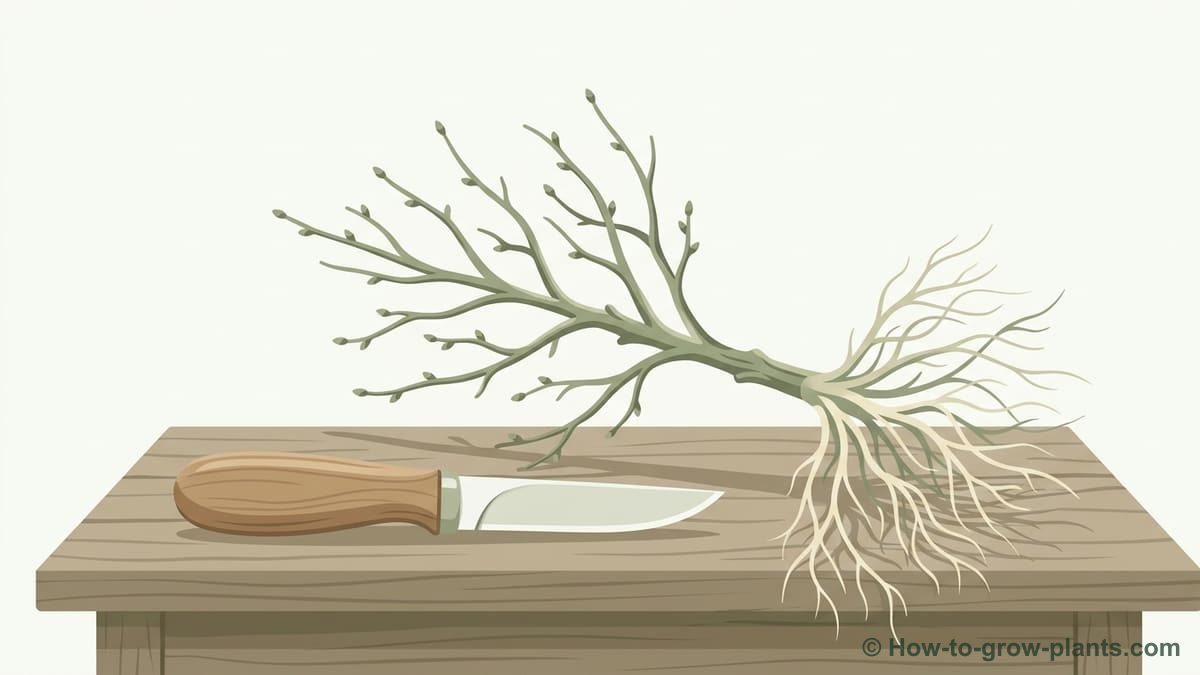
Meticulous preparation of equipment is the first step towards successful grafting. It ensures clean cuts and prevents the introduction of diseases.
Essential equipment
For whip and tongue grafting, you will need:
- Very sharp grafting knife: The video uses an Opinel-type knife. Sharpening is crucial for clean cuts.
- Pruners: To prepare the scion and rootstock before fine cuts.
- 90% alcohol: Essential for sterilizing your tools.
- Grafting tape (Flexiband): An elastic and flexible, often self-adhesive, tape that holds the graft and protects it.
- Grafting wax or compound: To seal wounds and prevent dehydration.
Preparation of the workstation and plants
Sterilize your tools
Before each cut, thoroughly disinfect your knife and pruners with 90% alcohol to prevent disease transmission.
- Spray or wipe blades with alcohol.
- Allow to air dry or wipe with a sterile cloth.
Select scion and rootstock
Choose healthy, vigorous scions and rootstocks of similar diameter. Scions are generally taken in winter from dormant wood and stored in a cool place.
- Match the closest possible diameters.
- The scion should have 2 to 3 buds (eyes).
Step 2Detailed steps for performing whip and tongue grafting
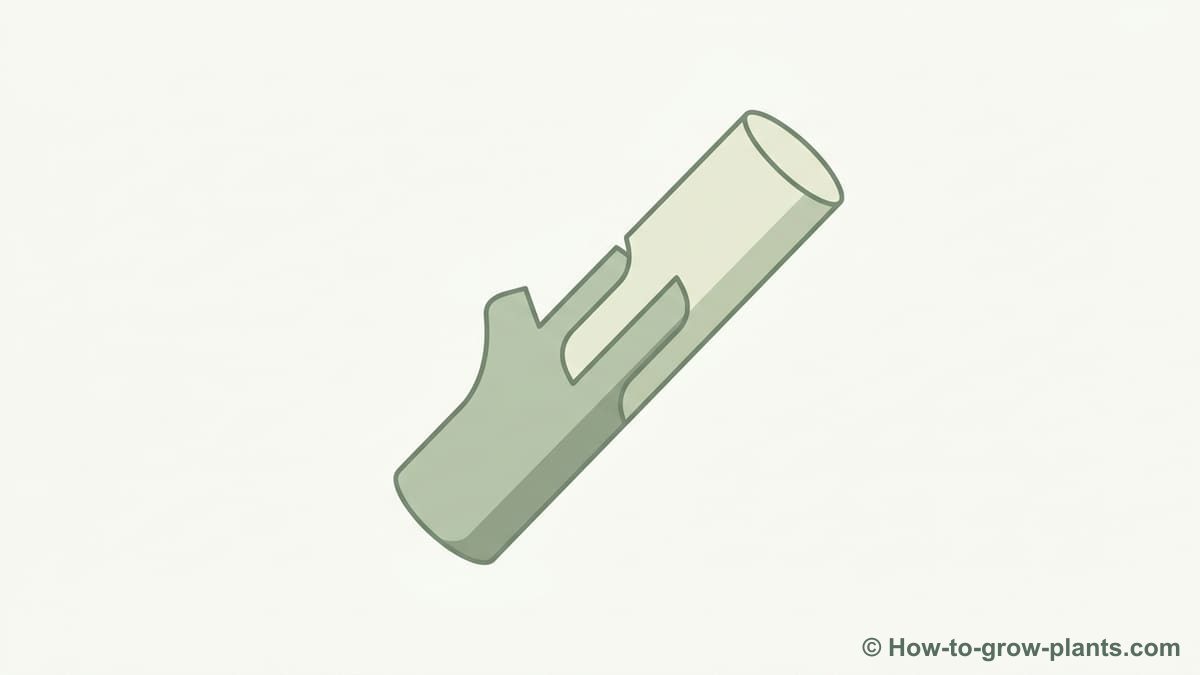
Greffe SAUVAGE presents three whip and tongue grafting methods. Follow these instructions for each technique, always keeping cleanliness and precision in mind.
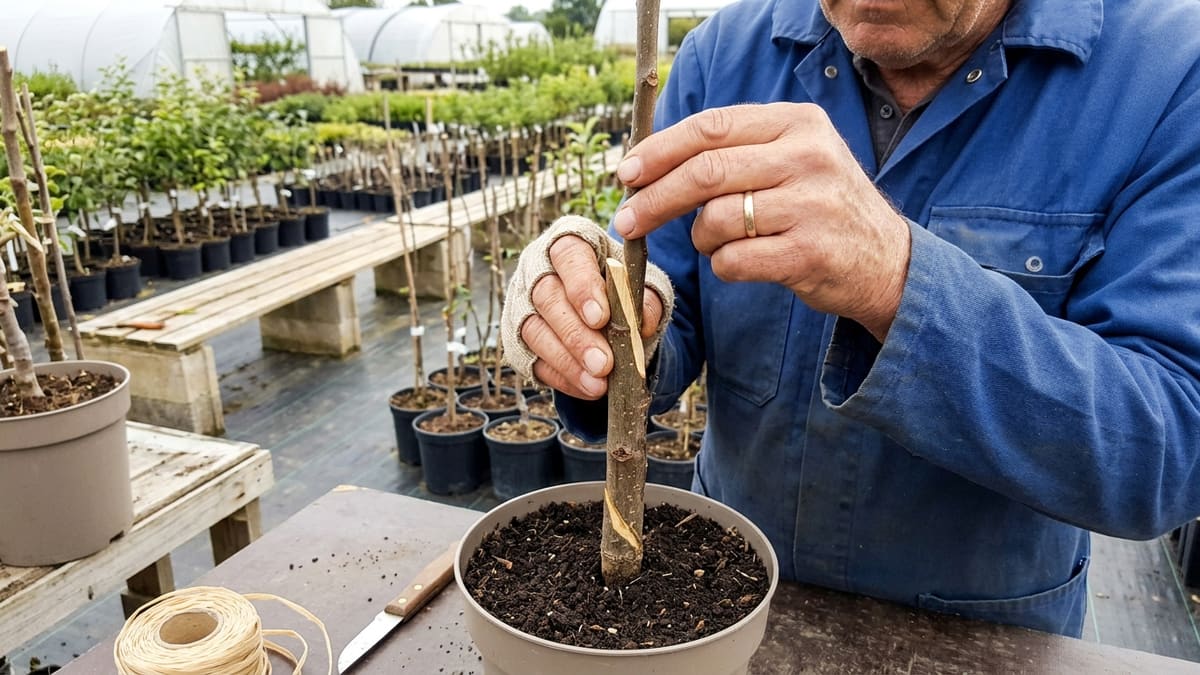
1. The simple whip and tongue graft
This is the most straightforward variant, ideal for beginners, requiring two complementary beveled cuts.
Make the first cut on the rootstock
Make a clean, single beveled cut on the rootstock, about 1 to 2 cm long, cutting from bottom to top.
- Aim for a smooth, flat surface.
- Practice on scrap wood to perfect your technique.
Prepare the scion
Make a corresponding beveled cut on the scion, ensuring it has the same length and angle as that of the rootstock.
- Avoid touching the cut surface with your fingers to prevent contamination.
- Leave 2 to 3 buds on the scion.
Assemble scion and rootstock
Align the two cut surfaces precisely, so that their cambium layers (the green layer just under the bark) are in maximum contact.
- The barks must coincide perfectly.
- Ensure a perfect fit.
2. The complicated whip and tongue graft
This method offers superior stability thanks to interlocking cuts, making it easier to hold before tying. It's an excellent choice for a more robust initial union.
Bevel and incision on the rootstock
Make the initial beveled cut on the rootstock (as for the simple graft), then create a small downward incision about one-third of the bevel's length, without going all the way to the base.
- The incision forms a "tongue" for interlocking.
- Be delicate to avoid splitting the wood.
Bevel and incision on the scion
Make corresponding beveled cut and incision on the scion, so as to allow for a perfect interlock.
- The scion's incision should be in the upper two-thirds of the bevel.
- The scion's tongue must slide into the rootstock's incision.
Interlock the elements
Gently slide the scion and rootstock into each other, ensuring the tongues interlock and the cambium layers are perfectly aligned.
- The fit must be firm and self-supporting.
- This stability simplifies subsequent tying.
3. The saddle graft (for different diameters)
This technique is an adaptation of whip and tongue grafting for situations where the rootstock is significantly thicker than the scion. The Greffe SAUVAGE video mentions that an identical diameter is not always imperative and how to manage these situations.
Prepare the thicker rootstock
Cut the rootstock at an angle over only part of its thickness, to create a flat, wide surface. Then, make a small angled notch in this surface.
- The oblique cut should create a stable base for the scion.
- The notch allows the scion to be partially inserted.
Prepare the scion
Prepare your scion with a beveled cut and a small incision, similar to the complicated whip and tongue graft, but adapted to fit into the oblique cut of the rootstock.
- The scion's bevel must match the rootstock's oblique cut.
- The incision will help secure the scion.
Insert and align
Gently insert the scion into the oblique cut and notch of the rootstock, aligning the cambium layers on at least one side for maximum contact.
- Given the different diameters, focus on aligning the cambium on only one side.
- This maximizes the chances of success.
Alternative: The double saddle graft
The video briefly mentions a "double saddle graft" (referring to a diagram not visually demonstrated), which involves using two scions on a single larger rootstock. This method can increase chances of success or allow for creating a multi-variety tree. For saddle grafting, maximizing cambial contact remains paramount.
Step 3How to ensure proper healing and maximize the success rate?
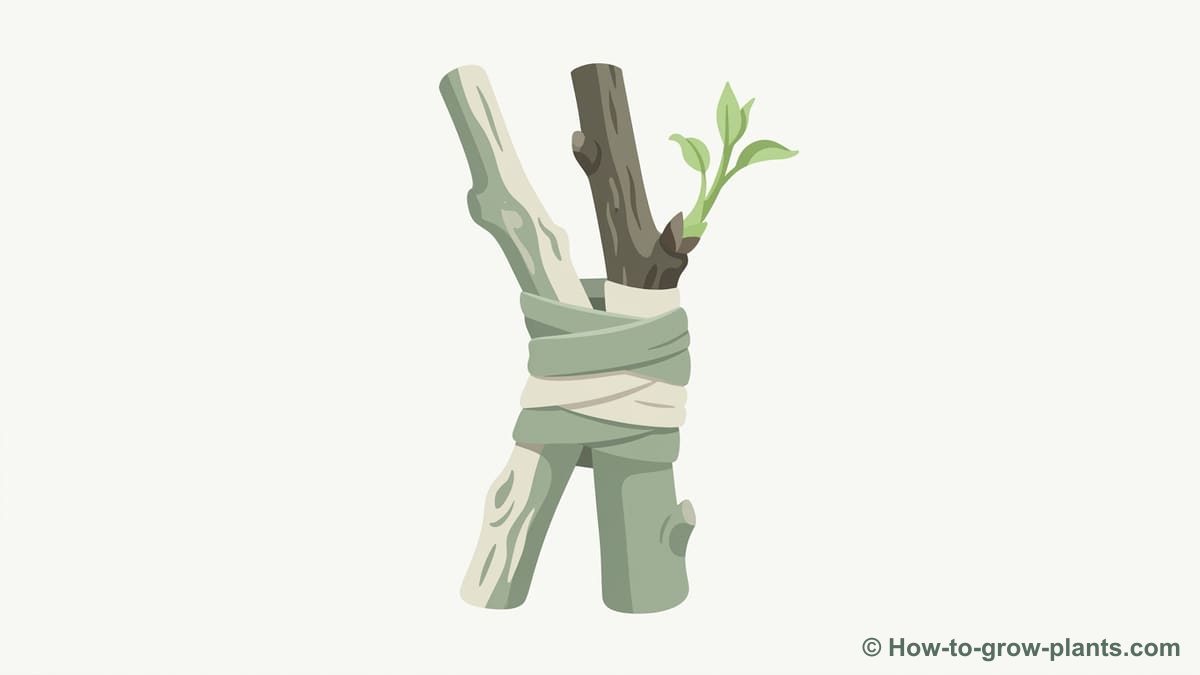
After assembly, protecting the graft is essential for its survival and growth.
Tie with Flexiband
Firmly wrap the graft union with flexible adhesive tape (Flexiband), starting from the bottom and working upwards.
- Ensure there are no air pockets or gaps.
- Overlap layers to create a watertight seal.
- Tying from bottom to top allows water to drain effectively.
Apply grafting compound
Seal all exposed cut surfaces, especially the top of the scion, with grafting compound or wax to prevent dehydration.
- This protects the wood from drying out and diseases.
- For whip and tongue grafts, the tape often covers the union, but exposed ends still require compound.
Protect from wildlife
Protect your young grafts from birds and large animals like deer. Birds can perch on them and damage the fragile graft, while larger animals can rub against or eat the new growth.
- Bird protection: Place a small branch (e.g., hazelnut or willow) bent into a circle or a vertical stick just above the scion. This offers a perch for birds, diverting them from the graft itself.
- Animal protection: Install a protective cage or netting around the plant to protect it from browsing and rubbing.
When is the ideal time for whip and tongue grafting and why?
Grafting success is intrinsically linked to proper timing. Whip and tongue grafting is generally practiced when the plant is dormant but about to awaken, ensuring good sap flow for healing.
- Season: The ideal time in temperate climates is from March to April, just before bud break (appearance of buds). This ensures the rootstock is ready to actively support new growth.
- Weather: Choose a mild and dry day. Avoid frost, strong winds, or heavy rains, which can damage the fragile graft.
- Plant condition: Both scion and rootstock must be healthy. Ideally, the rootstock is in full growth activity while the scion is still dormant.
What pitfalls to avoid when performing these grafts?
Even with meticulous preparation, grafting can present challenges. Knowing common mistakes can significantly improve your success rate.
- Poor cuts: Jagged or irregular cuts prevent proper cambium alignment, leading to failure. Always use a very sharp and clean knife, and aim for single, smooth cuts.
- Touching cut surfaces: Natural oils and bacteria from your fingers can contaminate the wound, hindering healing. Handle the scion and rootstock only by the bark.
- Poor cambium alignment: The cambium layers of the scion and rootstock must be in direct contact for the graft to take. Carefully check alignment, especially for saddle grafting where only one side may align perfectly.
- Insufficient tying: Loose or poorly applied grafting tape allows air and moisture to enter, drying out the graft. Ensure the tape is tight and seals completely.
- Lack of protection: Failing to protect the graft from birds, deer, or other pests can lead to immediate failure, as demonstrated in the video. Always implement protective measures.
How to choose a good rootstock and scion of similar diameter?
The choice and preparation of components are fundamental for successful grafting, especially for simple and complicated whip and tongue grafts which prioritize similar diameters.
- Health and vigor: Select rootstocks and scions from healthy, vigorous plants, without signs of disease or damage.
- Compatibility: Ensure the scion species is compatible with the rootstock species. For example, a pear on a quince, an apple on a standard apple rootstock or an M9 apple rootstock. The Greffe SAUVAGE video emphasizes this fundamental compatibility.
- Diameter: For simple and complicated whip and tongue grafting, the ideal is for the scion and rootstock to have exactly the same diameter. This maximizes the cambial contact surface, significantly increasing chances of success. The ideal diameter ranges from 0.8 to 1.5 cm (pencil size).
- Scion preparation: Take scions from previous year's wood, ideally in winter (December-February) during dormancy. Store them in a cool, moist medium (peat, sand, moist sawdust) until grafting. Each scion should have 2 to 3 well-formed buds.
- Rootstock preparation: The rootstock must be in sap flow (just before bud break, March-April) for better take. It is often planted a year before being grafted.
🏆 The Expert's Verdict: Tips for Maximizing Success
By understanding these nuances and applying the techniques demonstrated by Greffe SAUVAGE, you will be well on your way to successfully propagating your favorite fruit trees.
Frequently asked questions
When is the ideal time to perform whip and tongue grafting?
The best time for whip and tongue grafting is generally from March to April, during the plant's dormant period just before bud break. This timing ensures the rootstock is ready to actively grow and support the newly grafted scion, maximizing the chances of a successful union and healing.
What is whip and tongue grafting and what are its types?
Whip and tongue grafting is a tree grafting technique known for its high success rate and excellent healing, primarily used when the scion and rootstock have similar diameters. It includes three main types: the simple whip and tongue graft (two corresponding beveled cuts), the complicated whip and tongue graft (adds an internal incision for a self-holding union), and the saddle graft (adapted for larger diameter rootstocks, with a specific angular cut).
What are the 4 main types of grafts?
Although many grafting techniques exist, the Greffe SAUVAGE video and general arboriculture highlight four common types: whip and tongue grafting (simple, complicated, and saddle variants), crown grafting (for larger rootstocks), cleft grafting (an intermediate option), and occasionally bud grafting. Each is adapted to different plant sizes and seasonal conditions.
How do you say 'greffe' in English?
The French term 'greffe' translates to 'graft' in English. This refers to the horticultural technique of joining parts of two plants so that they grow as one, usually to combine desirable traits such as strong roots from one plant with fruit-bearing branches from another.