How to Germinate Washingtonia Robusta Palm Seeds: Your Step-by-Step Guide
Collect and Prepare Washingtonia Robusta Seeds
For successful germination of your Washingtonia Robusta palm seeds, seed quality and preparation are paramount.
Select Seeds
Collect Washingtonia Robusta seeds that have naturally fallen from the tree.
- Choose black, ripe, and healthy seeds.
- Immature seeds (brown or lighter) have a lower germination rate.
- Avoid floating seeds; they are often non-viable.
Clean the Seeds
Remove any remaining pulp or fruit flesh from the seeds by gently rubbing them or using a small brush.
- Clean seeds prevent mold during germination.
- Ensure no pulp remains.
Soak for Hydration
Submerge the cleaned seeds in a glass of clean water for 4 days.
- Change the water daily to keep it fresh.
- This step hydrates the seeds and softens their hard outer shell, which is essential for germination.
- If any husks remain, gently crush them to remove.
- Discard any seeds that float after soaking and hull removal, as they are likely non-viable.
Paper Towel Method for Fast Germination
After soaking, create an ideal environment for seed germination. The paper towel method, as shown in the video, provides the necessary moisture and darkness for Washingtonia Robusta palm seeds to sprout.
Prepare the Paper Towel
Take a sheet of paper towel or toilet paper.
- Arrange 4 to 5 clean seeds in a line, leaving about 2 to 3 cm between each.
- Fold the paper towel over the seeds to form a small packet.
Moisten the Packet
Submerge the paper towel packet in clean water until it is thoroughly saturated.
- Then, gently squeeze out excess water.
- The paper should be damp, not dripping, to prevent rot.
Seal in Aluminum Foil
Wrap the damp packet tightly in aluminum foil.
- Press the edges firmly to create a sealed environment that retains moisture and blocks light.
- This provides the darkness and stable humidity needed for rapid germination.
Incubate in Warmth
Place the aluminum packet in a warm location.
- Consistent heat is key.
- The video recommends a stable temperature of 20-25°C.
- Check the seeds after 2 weeks.
- Carefully unwrap the aluminum and paper towel to inspect for germination.
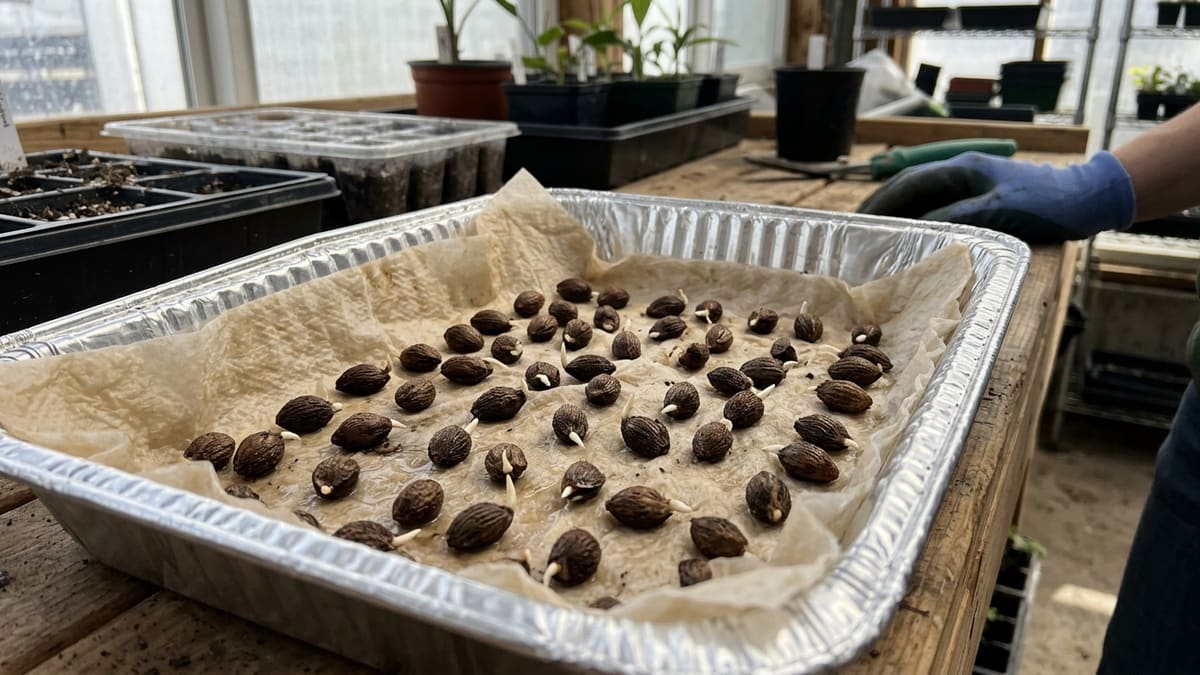
- You should observe small roots and a sprout emerging.
Plant Germinated Washingtonia Robusta Seeds
Once your Washingtonia Robusta seeds have germinated, it's time to transfer them into a growing medium. Handle young seedlings with extreme delicacy.
Choose the Right Pot and Substrate
Select a pot at least 15-20 cm deep, as Washingtonia Robusta develops a deep root system.
- Any type of moist, well-draining potting mix is suitable.
- The video does not specify proportions, but a standard seed-starting mix enriched with perlite or sand for drainage is ideal.
- Water the potting mix thoroughly a few hours before planting so it is moist but not saturated.
Create a Planting Hole
Using a small stick or similar tool, make a hole in the center of the prepared potting mix.
- The hole should be deep enough to accommodate the root of the germinated seed without bending or damaging it.
- The seed itself should be just below the soil surface.
Gently Plant the Seedling
Carefully pick up a germinated seed, holding it by the seed body, not the fragile root or shoot.
- Insert it into the prepared hole, ensuring the root points downwards.
- Gently firm the surrounding potting mix to secure the seedling and eliminate air pockets.
- Proceed very slowly and lightly to avoid breaking the root.
Optimal Care for Young Washingtonia Robusta Palms
To ensure the growth of your young Washingtonia Robusta palm, provide specific conditions that mimic its natural habitat. Proper light and watering are essential after germinating the seeds.
Provide Ample Sunlight
Washingtonia Robusta palms love the sun.
- Place your pot in full sun as much as possible.
- If there's no risk of frost, put it outdoors to maximize exposure.
- If temperatures are still low, keep it indoors near a sunny window so it receives many hours of direct light.
Maintain Consistent Moisture (Avoid Waterlogging)
It is crucial to keep the substrate consistently moist, especially during the early growth stages.
- Check the potting mix daily and add a little water if the surface begins to dry.
- However, never let the pot become waterlogged, as this can lead to root rot.
- These palms appreciate plenty of water but do not tolerate standing water.
Recognizing a Germinated Seed and Transplanting Young Seedlings
A Washingtonia Robusta seed is considered germinated when you observe the emergence of a small white root (radicle) and a shoot (plumule) from the seed body. This is the time to delicately transfer it to an individual pot. The video shows transplanting as soon as the root and shoot are visible, typically after 2 weeks in the aluminum foil.
Transplanting is done with the utmost care to avoid damaging the fragile young sprouts. Prepare your individual pots with moist substrate before unwrapping the germinated seeds.
Long-Term Growth and Transplantation
After about two months, you will notice significant growth, with the emergence of the first true fan-shaped leaf. After about six months, your palm will have developed a noticeable trunk and several leaves, illustrating the typical rapid growth of Washingtonia Robusta. At this stage, your palm is ready for a larger pot or direct transplantation into the ground, depending on your climate and available space.
Continue with the same care routine: abundant light and consistent but not excessive watering. You can refresh the top layer of potting mix with a new blend every few months to provide additional nutrients. For more in-depth information on palm care, consult resources from the International Palm Society.
Common Mistakes to Avoid When Germinating Washingtonia Robusta
While growing Washingtonia Robusta from seed is relatively simple, some common mistakes can hinder success. By avoiding them, you will significantly improve your germination rates.
- Using non-viable seeds: Always choose dark, ripe seeds. Seeds that float after depulping and soaking are generally non-viable and should be discarded.
- Insufficient hydration: Failing to follow the 4-day soaking period or not soaking long enough can prevent germination, as the hard seed coat will not soften enough.
- Excess water during germination: While humidity is good, a soggy paper towel can lead to mold and rot, killing the embryonic plant. Ensure the paper is damp, not dripping.
- Disturbing delicate young seedlings: When transplanting, handle germinated seeds by the seed body, not the root or shoot, which are extremely fragile.
- Lack of light for young plants: Once planted, young Washingtonia Robusta palms need plenty of direct sun to grow vigorously. Insufficient lighting will result in leggy, weak plants.
- Poor pot drainage: Even though they like water, these palms hate waterlogging. Ensure your pots have drainage holes and your potting mix is not too dense.
🏆 Expert's Opinion: The Unique Growth of Washingtonia Robusta
⚠️ Important Warning: Growing palms from seed is a rewarding experience. However, a palm grown from seed may exhibit slight variations from the parent plant. For Washingtonia Robusta, growing from seed reliably produces the species, although individual traits may vary. If you seek an exact replica of a specific variety (which is rare for this species), vegetative propagation would be necessary, but this is not applicable to this method.
Frequently asked questions
How to germinate Washingtonia robusta seeds?
To germinate Washingtonia robusta seeds, clean them thoroughly of any pulp. Soak them in clean water for 4 days, changing the water daily. Then, place the rehydrated seeds on a damp paper towel, spaced 2-3 cm apart, and fold the paper. Wrap this packet tightly in aluminum foil and place it in a warm location (20-25°C). Check after 2 weeks for germination, indicated by the emergence of a root and a shoot.
Is it difficult to grow palms from seeds?
Growing palms from seeds, especially Washingtonia robusta, is generally considered easy if you follow the correct seed preparation steps and provide optimal environmental conditions. The key is adequate hydration, consistent warmth, and delicate handling of young sprouts. Patience is also important, as germination times can vary.
How long does it take for Washingtonia robusta to germinate?
Washingtonia robusta seeds can germinate relatively quickly, often showing sprouts in 2 weeks if the paper towel and aluminum foil method is used under warm conditions (20-25°C). However, germination can sometimes take longer, up to several weeks or even a few months, depending on seed viability and environmental factors.
Can seeds be germinated directly in soil?
Yes, you can germinate Washingtonia robusta seeds directly in soil, but the paper towel method often yields faster and more consistent results due to better control of moisture and warmth. If sowing directly in soil, ensure the potting mix is well-draining, kept consistently moist (but not waterlogged), and placed in a warm location. Plant the seeds just below the surface and provide plenty of indirect light until sprouts appear.
What is the ideal substrate for germinating Washingtonia Robusta palm seeds?
For germinating Washingtonia Robusta palm seeds in pots, a quality, well-draining potting mix is ideal. A standard seed-starting mix enriched with perlite or coarse sand (about 1/3) is recommended to improve drainage and prevent waterlogging, while still retaining necessary moisture.