Growing a Banana Plant from Seed: The Easy Guide to Success
To grow a banana plant from seed, you need to choose the right seeds and prepare them properly. Unlike supermarket bananas, wild banana species contain viable seeds.
Distinguishing fertile banana seeds: what you need to know
Before you start growing banana plants, it's crucial to understand the nature of the seeds and the differences between species. The bananas you buy in supermarkets are seedless hybrids, selected for consumption. Their “seeds” are sterile and will not germinate. For success, you need to obtain seeds from wild banana plants, which are rich in viable, often robust seeds, resembling small, hard black beads.
Warning: If you plant seeds from supermarket bananas, they will most likely not germinate. For successful cultivation, procure seeds from wild banana species like Musa balbisiana or Musa acuminata. Ornamental bananas such as Musa basjoo (Japanese hardy banana) or Musa sikkimensis (Darjeeling banana), or even Ensete ventricosum for its exotic foliage, are excellent choices, especially if fruiting is not your primary goal.
Sourcing and preparing your banana seeds
The success of banana seed germination largely depends on their freshness and proper preparation. Always try to obtain the freshest possible seeds from a reputable supplier. Although seeds are designed for dormancy, their viability decreases over time. The fresher the seed, the higher your chances of success.
Soaking in warm water
The simplest and most effective method for preparing banana seeds is to soak them in warm water for 2 to 3 days.
- This helps soften their extremely hard outer shell, allowing water to penetrate and initiate the germination process.
- Place your seeds in a container of warm water and keep them in a warm place, such as on a radiator or in a heated propagator.
- In spring, when heating is still active in many homes, a radiator provides perfect constant warmth.
Scarification (optional but effective)
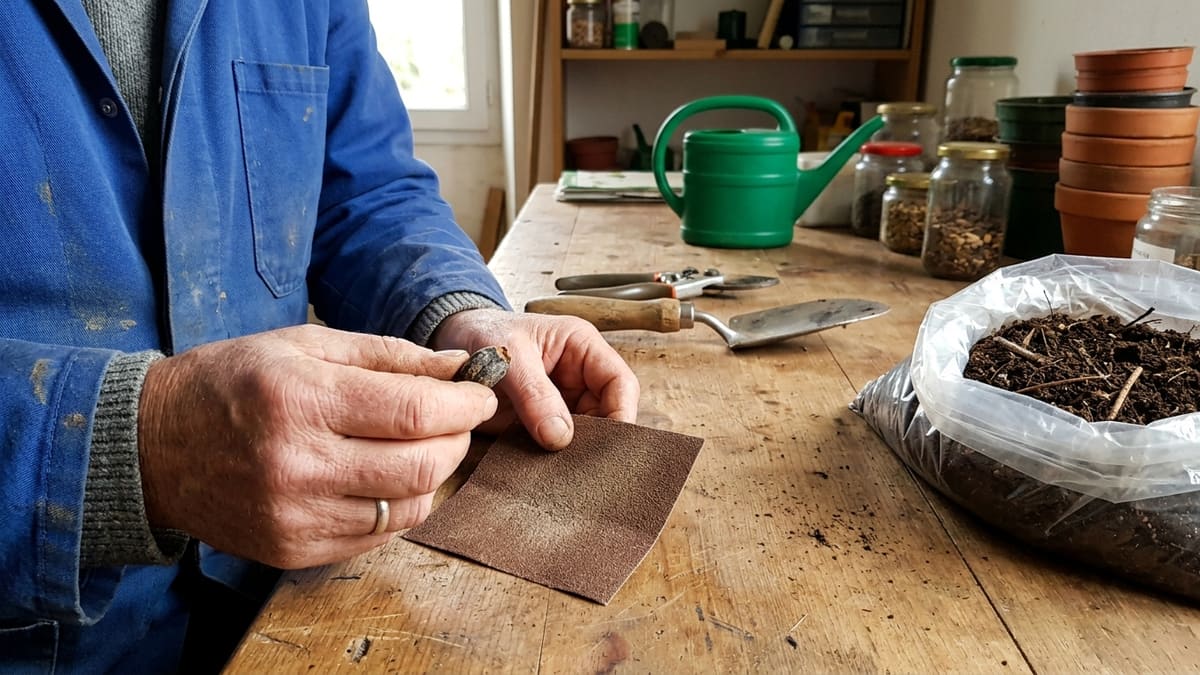
Another method to break the seed's hard shell is scarification.
- This involves gently abrading the outer layer of the seed with sandpaper.
- Be careful not to sand too deeply or damage the internal structure of the seed.
- The goal is just to wear down the shell enough to allow water to enter.
- This technique mimics the natural process of digestion by animals in nature, where gastric acids help break down the outer layer of the seed.
- Some gardeners even soak seeds in orange juice to replicate this acidic environment, though a simple warm water soak is usually sufficient.
Ideal conditions for germination
Once your banana seeds are prepared, creating an adequate environment is essential for successful germination. Banana species, often of tropical origin, thrive with constant warmth and humidity.
Sowing in quality potting mix
Sow your prepared banana seeds in a good quality, peat-free seed-starting mix.
- For optimal growth, ideally sow each seed in an individual pot or a seed tray.
- Banana seedlings grow extremely quickly, so giving them plenty of space from the beginning helps them develop strong root systems.
- If space is limited, you can sow several seeds per pot, but be prepared to thin them out quickly once they have germinated.
Proper planting depth and humidity
Plant your banana seeds at a depth of approximately 2 cm (a little less than an inch).
- After sowing, cover the soil surface with a layer of vermiculite.
- This material is excellent for retaining moisture, which banana seeds need before germination.
- Ensure the soil remains moist but never waterlogged, as this could lead to rot.
Maintaining humidity and temperature cycles
To maintain high humidity and prevent water evaporation, place a layer of glass or clear plexiglass over the top of your pot.
- You can also use a clear plastic bag.
- Ensure the cover is transparent to allow light to reach the seedlings once they emerge, as they will need to photosynthesize.
- Many banana species also benefit from a daily warm and cool cycle.
- If you are using a heating mat, consider placing the pots towards the edge of the mat to allow for ambient temperature fluctuations, mimicking natural tropical conditions.
The wait and initial care
This step requires the most patience! The time it takes for banana seeds to germinate is highly variable, ranging from two weeks to three months, or even longer for some varieties. Don't be discouraged by slow progress; simply maintain constant humidity and warmth (between 20 and 30°C / 68-86°F). If the soil appears to dry out, water it to keep it moist, but never let it become waterlogged.
Once you see a pale green shoot emerge from the soil surface, congratulations, your banana seed has germinated! From this point, the growth rate of banana seedlings is truly incredible.
Repotting and fertilizing your young plants
Banana seedlings grow very quickly and will soon benefit from repotting into a larger container with a nutrient-rich potting mix. Their root systems develop extremely fast, so prompt repotting prevents them from becoming cramped and stunted.
Transplanting seedlings
If you have sown several banana seeds in the same pot, you will need to prick them out and repot them individually quite early.
- Wait until the first true leaf unfurls.
- Use a thin stick or pencil to gently loosen the roots from the soil.
- Be extremely careful not to pull on the stem or bend it, as young seedlings are fragile and easily damaged, which could be fatal.
- The goal is to separate them without stressing their delicate root systems.
Repotting and enriching the potting mix
Banana plants are "heavy feeders" and require a lot of nutrients.
- When repotting, incorporate more food into your potting mix than you normally would for other seedlings.
- For organic growers, chicken manure pellets are an excellent choice as they are rich in nitrogen, which promotes lush foliage growth, perfect for banana plants with their large green leaves.
- Mix the pellets into a good quality all-purpose potting mix and repot your seedlings directly into 9 cm or even 1-liter pots.
- As spring warms up and daylight hours lengthen, these plants will grow quickly, filling a 1-liter pot with roots in just 2 to 4 weeks.
Long-term care and propagation
Within four weeks of germination, your banana seedlings will have transformed into robust young banana plants. At this stage, if the season is right and your climate permits, you can transplant them outdoors. For those living in cooler climates or growing ornamental varieties, continue to repot them into larger containers and ensure consistent feeding, whether they are grown indoors or in a greenhouse.
One of the great advantages of many banana plants, especially those in the Musa genus, is their ability to propagate once mature. A happy and healthy mature plant will produce suckers (or pups) – tiny baby banana plants that grow next to the main plant. You can divide these suckers to create new, genetically identical plants, expanding your banana collection without needing to restart the seed germination process.
What types of banana trees are suitable for indoor cultivation or different climatic zones?
It is essential to choose the right banana species based on your environment. If you are growing indoors or in a small apartment garden, opt for dwarf varieties or those that tolerate pot cultivation well. For outdoors, cold-hardy species are preferred in temperate climates.
- For indoor or pot cultivation: Varieties like Musa acuminata 'Dwarf Cavendish' are popular for their compact size (about 1.5 to 2.5 meters or 5 to 8 feet) and their ability to fruit indoors with proper care. Musa ornata is also appreciated for its decorative flowers and manageable size.
- For temperate climates (outdoors): Musa basjoo (Japanese hardy banana) is one of the most cold-resistant, capable of withstanding temperatures down to -15°C (5°F) if protected in winter. Musa sikkimensis (Darjeeling banana) is another robust and aesthetic option. These varieties are primarily grown for their ornamental foliage, with fruiting being rare or difficult in these climates.
- For warm climates (outdoors): Species like Musa acuminata, Musa balbisiana or their hybrids can produce edible fruits if conditions are optimal (heat, humidity, long growing season).
Always research the specific needs of the species you choose before starting to sow.
Pitfalls and mistakes to absolutely avoid to ensure success
Growing banana plants from seed can be rewarding, but some common mistakes can jeopardize your success. Here are the pitfalls to avoid:
- Using supermarket banana seeds: This is the most common mistake. As mentioned, these bananas are sterile. Always buy your seeds from specialized and reputable suppliers.
- Neglecting scarification and soaking: The hard shell of banana seeds is a natural barrier. Without adequate preparation (prolonged soaking in warm water or light scarification), germination will be very slow or non-existent.
- Inconsistent temperature: Banana seeds need constant warmth, ideally between 20 and 30°C (68-86°F). Too large fluctuations or too low temperatures will inhibit germination. A heating mat or a spot near a radiator is recommended.
- Unsuitable or too dry/wet substrate: A quality, light, well-draining seed-starting mix is essential. The substrate must remain consistently moist, but never soggy. Excess water leads to seed rot.
- Lack of patience: Banana seed germination can take weeks, or even months. Do not discard your pots prematurely. Continue to maintain ideal conditions and be persistent.
- Lack of light after germination: Once germinated, young seedlings need plenty of indirect light to develop. A lack of light will result in leggy growth and weak plants.
- Not repotting on time: Banana plants are fast-growing. Leaving seedlings too long in small pots or nutrient-poor soil will significantly slow their development.
🏆 The Expert's Verdict: Tips for Overcoming Common Challenges
By following these steps, you can successfully grow your own banana plant from seeds and enjoy the exotic beauty or delicious fruits they can offer. Patience and attention to detail are your best allies in this rewarding gardening endeavor.