How to Grow a Banana Tree from Seeds: The Easy Method for Beginners
 Article written and verified by a botanist specialized in exotic plants and an experienced gardener in greenhouse and indoor cultivation. · Updated in 2026
To successfully grow a banana tree from seeds with an easy method, start by selecting fresh and viable seeds, ideally from wild varieties such as Musa acuminata or Musa balbisiana, or ornamental varieties like Musa basjoo. The crucial step is to soften the hard outer shell of the seed by scarification or, more simply, by soaking them in lukewarm water (around 25°C) for 48 to 72 hours. This process, combined with constant warmth (ideally between 25 and 30 °C) and high humidity, is fundamental to trigger germination. Sow your prepared seeds about 1.5 to 2 cm deep in a light, well-draining, peat-free seedling substrate, and cover the pots with a transparent lid or plastic wrap to maintain an ambient humidity close to 80-90%.
Patience is essential, as germination can take from three weeks to several months (sometimes up to a year). Once your seedlings emerge, continue to provide constant humidity and regular watering without overdoing it. Banana plants are giant herbs (not trees) and, with proper care, your seedlings will quickly transform into robust young plants, ready to be repotted or grown outdoors in suitable climates. To optimize your chances of success, use a heating mat to maintain constant temperature and a mini-greenhouse for humidity.
Cultivating exotic plants from seeds is an exciting adventure, and the banana plant, despite its tropical origins, is quite accessible to amateur gardeners. This guide reveals a simple and effective method to successfully germinate your banana seeds and obtain vigorous plants.
How to properly select and prepare banana seeds to optimize germination?
Successful germination begins with choosing the right seeds. Supermarket bananas, selected for fruit production, generally contain few or no viable seeds. Prioritize buying fresh seeds of wild or ornamental varieties from specialized suppliers. Species such as Musa acuminata, Musa balbisiana, Musa sikkimensis, or the hardier Musa basjoo are excellent choices. Seed freshness is crucial, as their viability decreases rapidly over time.
The next fundamental step is to soften the extremely hard outer shell of the seed. This shell acts as physical dormancy and must be altered to allow water to penetrate and germination to begin. Here are the two most effective and complementary methods:
Warm Water Soaking (48 to 72h)
This is the simplest and most recommended method. Submerge your banana seeds in a container of lukewarm water (around 25°C) and let them soak for 48 to 72 hours. To maintain a constant temperature, you can use a thermos, a seedling heating mat, or place the container near a gentle heat source (like a radiator, but be careful not to overheat). Change the water every 12 to 24 hours to prevent mold development and ensure good oxygenation. Lukewarm water helps soften the shell and reactivate the embryo.
Mechanical Scarification
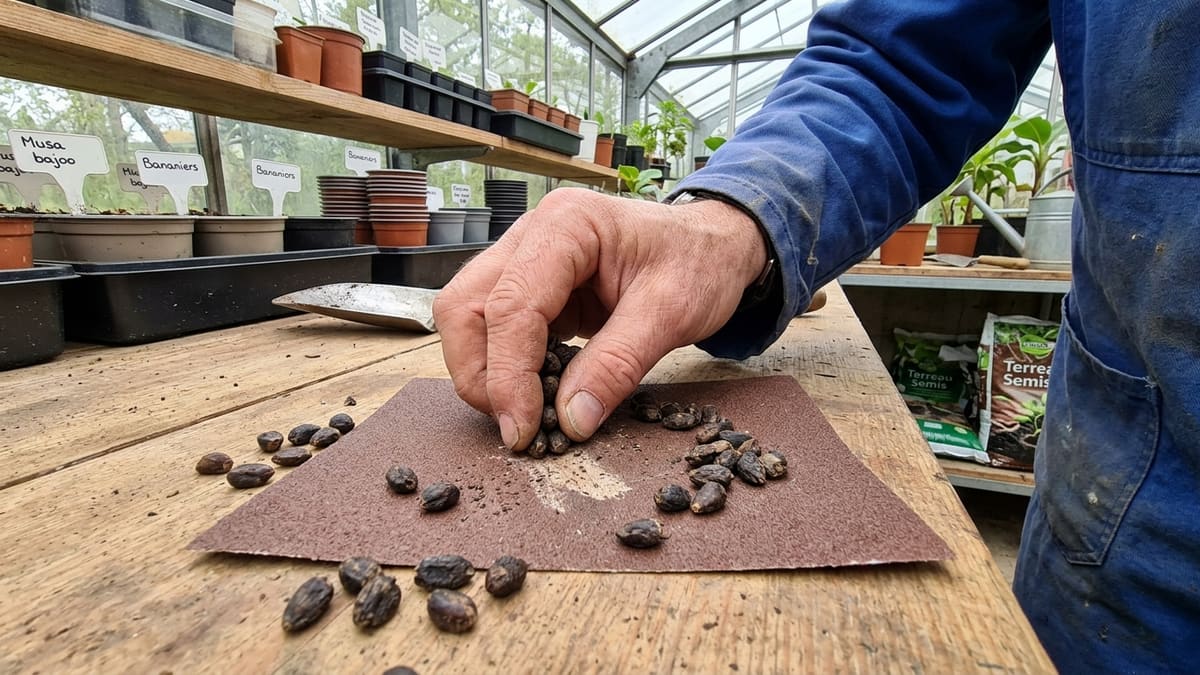
Scarification involves physically abrading the seed coat to facilitate water penetration. Gently rub the seed with fine sandpaper, a nail file, or small pliers until you observe a slight color change or a small abrasion. Be extremely careful not to pierce the shell or damage the internal embryo (the small black dot visible). This method mimics the passage of seeds through animal digestive systems, where acids soften the coat. It is particularly useful for the most recalcitrant seeds and can be combined with soaking for a synergistic effect.
After soaking and/or scarification, the seed coat should be visibly softer to the touch, a sign that it is ready for sowing.
What are the specific substrate, humidity, and temperature requirements for banana seed germination?
To germinate, banana seeds require a very specific environment, replicating tropical conditions. Do not underestimate the importance of these parameters.
The Ideal Substrate
Use a light, sterile, and very well-draining, peat-free seedling substrate. A mixture based on coconut fiber (for its ability to retain moisture while being aerated), enriched with perlite or vermiculite (about 30% of the volume), is ideal. You can also opt for good quality special seedling soil. The goal is to ensure excellent drainage to avoid seed asphyxiation and rot, while maintaining constant humidity. A substrate that is too heavy would retain too much water, which is fatal for banana seed germination.
Constant and Optimal Temperature
Banana seeds need constant warmth to germinate. Aim for a substrate temperature of 25 to 30 °C (77-86 °F). A thermostatic heating mat is the most effective tool to achieve this. You can also use a heated mini-greenhouse. Avoid significant temperature fluctuations which can inhibit germination. According to the Missouri Botanical Garden, some tropical species even benefit from a slight day/night cycle (e.g., 28°C during the day and 22°C at night) to mimic natural conditions, but constant warmth remains a solid foundation.
High and Stable Humidity
A relative air humidity of 80-90% is essential. Cover your seedling pots with a transparent lid, a cloche, or perforated plastic wrap to create a mini-greenhouse effect. This prevents evaporation and maintains a saturated atmosphere of humidity around the seeds. Make sure the cover is transparent to allow light to pass through once the seedlings emerge. Monitor for mold growth and briefly ventilate if necessary.
What is the step-by-step process for sowing seeds and caring for young shoots?
Once your seeds are prepared and your growing environment is ready, follow these methodical steps to maximize your chances of success:
Sow the seeds
Fill individual pots (approx. 7-9 cm in diameter) or seedling trays with the prepared substrate. It is recommended to sow only one seed per pot to avoid future root competition and facilitate transplanting. Plant each seed at a depth of 1.5 to 2 cm. Cover the seed with a thin layer of substrate, then a light layer of vermiculite or sand to help retain surface moisture and prevent crust formation.
Watering and Humidity Maintenance
After sowing, water the pots thoroughly from the bottom or with a very fine mister to thoroughly moisten the substrate without dislodging the seeds. The substrate should be moist but never waterlogged. Immediately cover the pots with a transparent lid, a cloche, or clear plastic wrap to maintain high humidity. Check the substrate moisture daily; if the surface starts to dry, re-water lightly. The goal is constant humidity, not excessive saturation.
Patience and Observation (Germination Time)
This is often the longest and most challenging stage. Banana seed germination is very irregular and can take from three weeks to several months, sometimes up to a year in some cases, depending on the variety and conditions. Do not be discouraged if you do not see immediate results. Continue to maintain constant warmth and humidity. Once a pale green shoot emerges on the soil surface, congratulations, your seed has germinated!
What are the ideal conditions (light, watering, location) for a banana plant grown from seed, indoors or outdoors?
As soon as your banana seeds have germinated, growth accelerates. Young seedlings are very dynamic and will require optimal conditions to develop into robust plants:
- Light: Provide bright, indirect light for at least 12 to 14 hours a day. If growing indoors, a south-facing window (with light sheer curtains in summer to avoid burning direct sun) or horticultural LED grow lights are highly recommended. Lack of light will result in etiolated and weak plants.
- Watering: Keep the substrate constantly moist but never soggy. Allow the top inch of soil to dry out before watering again. Overwatering is a common cause of root rot. During active growth (spring-summer), watering will be more frequent. In winter, reduce slightly.
- Feeding (Fertilization): Banana plants are 'hungry' plants. Once the seedlings have developed 3-4 true leaves, begin fertilizing them. Use a balanced or nitrogen-rich fertilizer (NPK 10-5-10 or similar) diluted by half every 2 to 3 weeks. For organic options, nettle slurry or composted chicken manure pellets are excellent for supporting their rapid foliar growth.
- Ambient Humidity: Banana plants appreciate high air humidity (above 60%). Indoors, this can be achieved by daily misting of the foliage (with non-calcareous water), by placing pots on a tray of moist clay pebbles, or by using a humidifier, especially in winter when heating dries the air.
- Location: For indoor gardeners, choose a warm, bright spot, away from cold drafts. For those in warmer climates (USDA zones 9-11), young plants can be gradually acclimated (hardened off) and planted outdoors once all risk of frost has passed and nighttime temperatures are consistently above 10°C.
💡 Understanding the Banana Plant: a Giant Herb, Not a Tree
It's a common misconception that banana plants are trees or palms. In reality, they are the world's largest herbs! This botanical classification comes from their “false stem” or 'pseudostem', which is made up of tightly rolled and overlapping leaf petioles, not wood like a true tree. This distinction is crucial for understanding their growth habit and care needs, as they prioritize rapid foliar development and intense nutrient absorption.
What common mistakes should be avoided when growing a banana tree from seeds?
Even with the best intentions, some common mistakes can jeopardize the success of your banana's germination and growth. Here are those to absolutely avoid:
- Neglecting seed preparation: Attempting to sow banana seeds without scarification or soaking is the most frequent cause of failure. The hard shell prevents water from penetrating, making germination impossible.
- Lack of consistent warmth: Insufficient or fluctuating substrate temperature is a major inhibiting factor. Tropical seeds need constant and high heat (25-30°C) to break their dormancy.
- Unsuitable substrate: Soil that is too heavy, compact, or poorly draining will encourage seed and young root rot. A sterile and aerated substrate is essential for seedling health.
- Excessive or insufficient watering: Constantly waterlogged soil leads to rot. Soil that is too dry blocks germination or kills young shoots. The balance is to maintain constant humidity without saturation.
- Lack of patience: Banana germination can be very long and irregular. Giving up too early, thinking the seeds are not viable, is a mistake. Continue to maintain optimal conditions for several months.
- Lack of light after germination: Once seedlings emerge, they need bright light. Insufficient light will make them weak, long, and pale (etiolated).
- Neglecting repotting and fertilization: Banana plants are fast-growing plants that quickly deplete soil nutrients and quickly outgrow their pots. Frequent repotting and regular fertilization are essential for their development.
What are the tips to accelerate germination or increase the success rate?
To give your banana seeds the best start and maximize your chances of success, integrate these expert tips into your process:
- Use fresh seeds from reliable sources: The viability of banana seeds decreases rapidly. Always purchase from specialized suppliers or reputable botanical gardens like those recommended by the Royal Horticultural Society (RHS) to ensure freshness.
- Combine scarification and soaking: For the hardest seeds, gentle scarification followed by soaking for 48 to 72 hours in lukewarm water is often more effective than a single method. Change the water daily.
- Maintain a constant and optimal temperature: Using a thermostatic heating mat set between 28 and 30 °C is the most powerful tip to accelerate germination. Thermal stability is more important than extreme heat.
- Gentle thermal variations: While consistency is key, some experts, such as those from the Missouri Botanical Garden, suggest that a slight temperature differential (e.g., 28°C during the day and 22°C at night) can mimic natural conditions and stimulate certain varieties. This can be achieved by placing seedlings on a slightly less powerful heating mat or turning off the heat source for a few hours at night.
- Use a light and sterile substrate: A mixture based on coconut fiber, perlite, and vermiculite offers excellent drainage and good moisture retention, reducing the risk of fungal diseases. The fact that it is sterile is also crucial.
- Maintain very high ambient humidity: A mini-greenhouse or clear plastic bag over the pots creates a saturated atmosphere which is vital for tropical seeds. Briefly ventilate daily to avoid excessive condensation and mold.
- Do not plant too deeply: 1.5 to 2 cm deep is sufficient. Planting too deeply can deplete the seed's energy before it reaches the surface.
- Patience and perseverance: This is the biggest tip. Some seeds can take six months or even more to germinate. Don't throw the pots away too early!
By combining these techniques, you offer your banana seeds the best conditions to sprout and develop into a lush plant.
The importance of repotting and feeding for young banana plants
Banana plants, especially those of the genus Musa, grow incredibly fast once established. This rapid growth means they quickly deplete the nutrients in their small pot and require frequent repotting.
Repotting schedule: Start by transferring individual seedlings into 9 cm diameter pots as soon as they have developed 2-3 true leaves. Expect to move them into pots of about 1 liter (approx. 15-18 cm in diameter) within the next 2 to 4 weeks. Their roots will very quickly fill these containers. Continue to repot into progressively larger pots as the plant grows, ensuring the root system always has enough space to expand. Frequent repotting encourages strong growth and prevents the plant from becoming stunted.
Feeding for vigorous growth: Banana plants are heavy nutrient consumers, especially for their large, lush leaves. Incorporate a rich organic fertilizer into your substrate during repotting. Composted chicken manure pellets, rich in nitrogen, are an excellent choice, as nitrogen promotes foliage development. Continue to fertilize your banana plants regularly, following product recommendations, whether grown indoors or outdoors. A well-fed banana plant will exhibit vigorous growth and vibrant green leaves.
🌟 The Advantage of “Information Variety”: Mastering Temperature Fluctuations
While constant warmth is often recommended for tropical seeds, some banana species can benefit from a daily cycle of warm and cool temperatures to trigger germination. This mimics natural environmental cues, such as warm days and cooler nights. Rather than using a sealed propagator that maintains a uniform temperature, consider a heating mat placed near the edge of a mini-greenhouse or radiator. This allows the root zone to stay warm while the ambient air temperature naturally drops at night. This slight temperature variation can significantly improve germination rates for certain varieties, offering an advantage over conventional constant-heat methods. This perspective, inspired by observations from the Jardin des Plantes de Paris on tropical plants, is crucial for gardeners looking to optimize their chances of success beyond basic care.
Next Steps: From Seedling to Mature Plant (and beyond)
Once your banana seedlings have grown into young plants, you can continue to cultivate them:
- Outdoor Planting: If you live in a warm climate with no risk of frost (USDA zones 9-11), you can plant your young banana trees outdoors. Make sure to acclimatize them well to outdoor conditions before final transplanting.
- Indoor Cultivation: For those in colder regions, banana plants make fantastic houseplants. Continue to provide them with bright light, constant humidity, and regular watering and fertilization. They will appreciate a humid environment, so consider misting or using a pebble tray.
- Propagation by suckers (pups): A fantastic advantage of many banana varieties (especially the genus Musa) is their ability to produce 'suckers' or 'pups'. These are young banana shoots that grow next to the mother plant. Once your plant is well-established and mature, you can separate these suckers to create new genetically identical plants, thus multiplying your banana collection without having to start from seeds again. This method is often easier and faster for propagation once you have an established plant. You can learn more about this technique from sources like the University of Strasbourg, specialized in botany.
By following these steps, you will be able to successfully grow banana trees from seeds and enjoy their lush foliage and exotic presence in your home or garden.
Questions fréquentes
How to grow a banana plant from seeds?
To grow a banana plant from seeds, start by selecting fresh seeds from wild or ornamental varieties. Scarify the hard outer shell by gently rubbing it with sandpaper or soak the seeds in lukewarm water (25°C) for 48 to 72 hours. Sow the seeds 1.5-2 cm deep in a light, sterile seedling substrate. Maintain constant warmth (25-30 °C) and high humidity (80-90%) by covering the pots. Be patient, germination can take from three weeks to several months. Once germinated, provide bright indirect light and keep the soil consistently moist.
How to plant banana seeds?
Plant banana seeds individually in pots or seedling cells filled with a very well-draining seedling substrate (e.g., coconut fiber/perlite). Sow each seed to a depth of 1.5 to 2 cm and cover with a thin layer of substrate. Water thoroughly to moisten the soil without saturating it, then cover the pots with a transparent lid or plastic wrap to create a humid environment. Place them in a warm spot, ideally between 25 and 30 °C, to encourage germination.
What are the tips for growing a banana plant?
For successful banana cultivation, use fresh seeds and prepare them by soaking and/or scarification. Ensure warm temperatures (25-30 °C) and high humidity during germination. Once germinated, provide bright indirect light and keep the soil consistently moist. Banana plants are heavy feeders, so repot frequently into larger pots and fertilize regularly with a nitrogen-rich fertilizer (like composted chicken manure pellets) to support their rapid growth.
How long does it take for a banana plant to grow?
The germination time for banana seeds is highly variable, ranging from three weeks to several months, and sometimes even up to a year. Once germination is successful, banana seedlings are very fast-growing. They can quickly fill a 1-liter pot with their roots in 2 to 4 weeks and will require frequent repotting into larger containers to develop into mature, robust plants.